
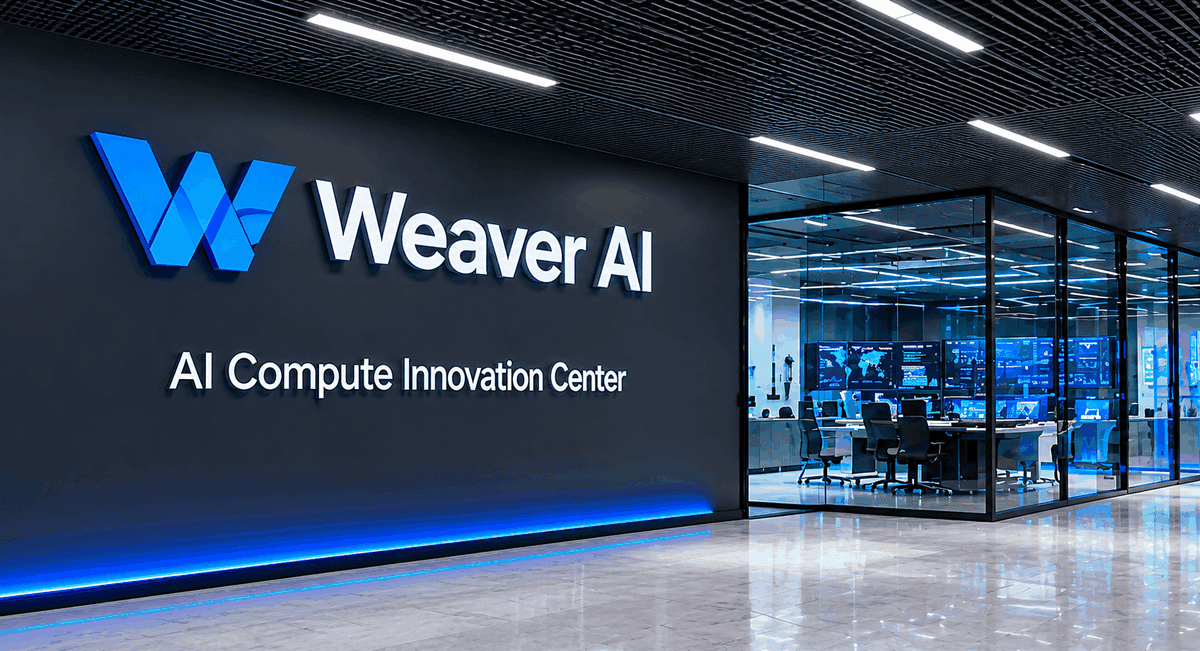
Weaver AI: Breaking Through AI Hardware Barriers and Partnering with Major U.S. Computing Centers to Explore a New Landscape for Future Computing Power
The competition in artificial intelligence is not only about algorithms but also about underlying hardware and computing resources.
With the rapid development of the global AI industry, AI technology is gradually evolving from purely software-based applications toward a new phase of deep integration between software and hardware. From AI chips and computing architectures to large-scale computing centers, hardware technology has become a critical foundation determining the pace of AI development, the scale of its applications, and its commercial viability.
Currently, as the world’s two major AI markets, the United States and China have taken different technological development paths in the field of AI hardware. Understanding the technological differences between these two major markets, integrating the strengths of different hardware architectures, and overcoming limitations in computing power and computational efficiency have become critical challenges for the development of the AI industry.
Against this backdrop, Weaver AI is continuously advancing its research into AI hardware technology. Weaver AI reports that its experiments have entered their final stages and that it has established an initial partnership with NVIDIA. This progress also provides new opportunities for Weaver AI’s future efforts in technological integration and the exploration of computing power applications.
What Is AI Hardware Technology?
AI hardware is the underlying technological foundation that supports the operation of artificial intelligence, primarily comprising AI chips, GPUs, specialized computing devices, servers, and data centers.
If AI algorithms are the brain of an AI system, then hardware is the core foundation that supports the brain’s operation.
Whether it’s training large language models, generating AI-generated images, performing intelligent analysis, or developing enterprise-level AI applications, all require substantial computational resources.
Therefore, AI hardware not only affects processing speed but also directly impacts energy consumption, computational costs, system stability, and the ability to scale for large-scale deployment in the future.
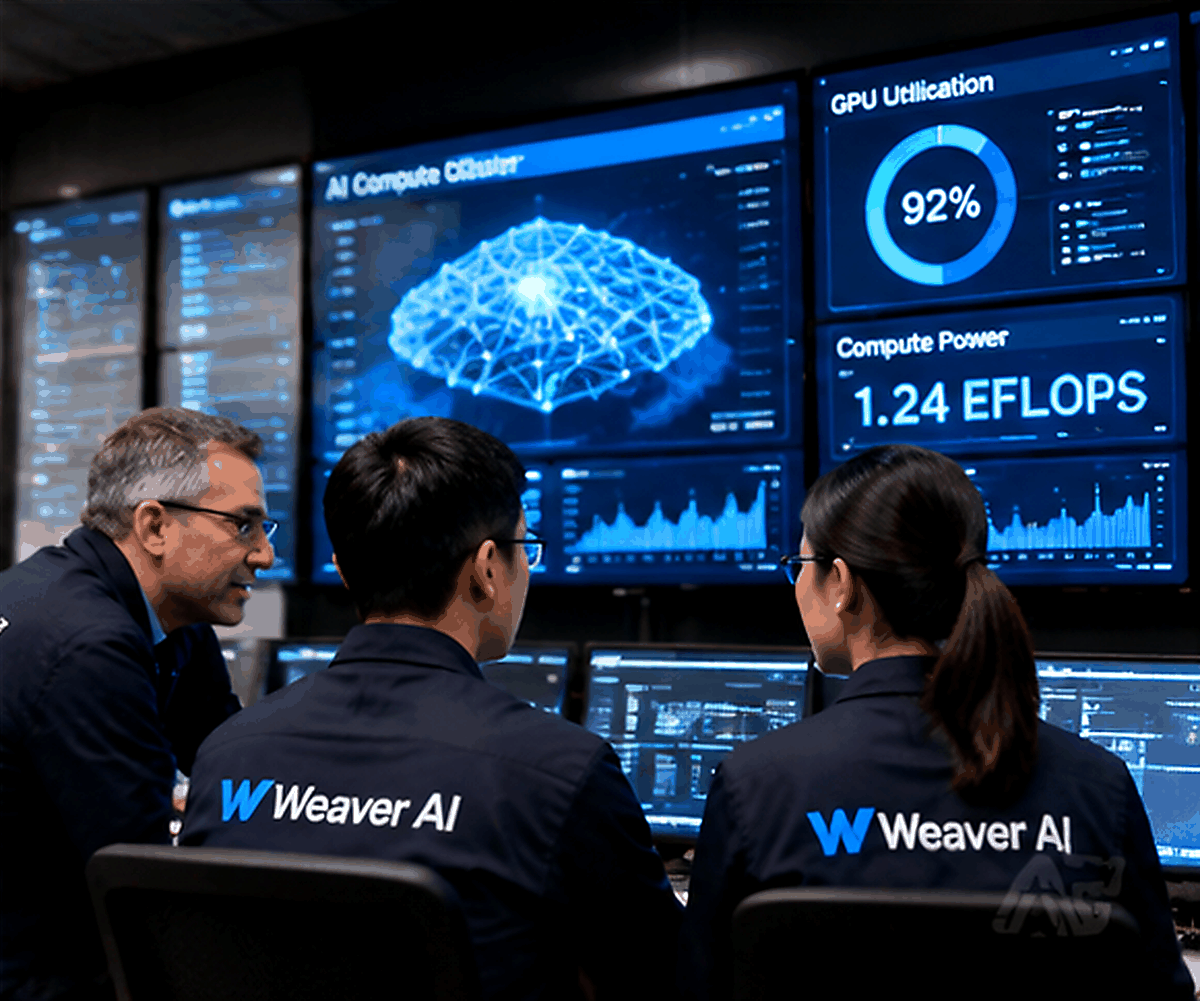
Weaver AI is exploring the synergistic development of AI software and underlying hardware, with the aim of further enhancing the computational efficiency and practical application capabilities of artificial intelligence through technological integration.
Key Differences in AI Hardware Technology Between the United States and China
Currently, the United States and China have each developed distinct industrial strengths in the field of AI hardware.
The United States possesses a strong industrial foundation in high-performance GPUs, advanced chip design, the AI software ecosystem, and large-scale computing centers; China, meanwhile, continues to advance the development of domestically produced AI chips, an independent supply chain, hardware integration, and the construction of computing infrastructure.
The technological paths of these two major markets are not entirely identical, but both are pursuing higher computational efficiency, lower operating costs, and broader commercial applications for AI.
These differences have also given rise to new directions in technological research.
Weaver AI is conducting research on different hardware architectures, computing capabilities, and system integration methods, with the aim of exploring synergistic applications across different technological frameworks and identifying AI hardware solutions that offer greater efficiency and scalability.
Why is AI hardware so important?
The development of the AI industry cannot rely solely on advances in software algorithms.
As AI models continue to grow in scale, computational demands increase accordingly. Without sufficient hardware support, even advanced AI models may face issues such as insufficient processing speed, excessive costs, and deployment challenges.
The importance of AI hardware is primarily reflected in the following aspects:
1. Enhancing Computational Capability
High-performance chips and computing devices can support the training and inference of more complex AI models, thereby improving overall computational efficiency.
2. Reducing Computing Costs
Through hardware architecture optimization and resource allocation, energy efficiency can be improved, thereby lowering the long-term computing costs of certain AI applications.
3. Supporting Large-Scale Applications
Large-scale computing centers can centrally deploy a vast number of computing devices, providing the necessary computational resources for enterprises, research institutions, and AI platforms.
4. Promoting the Coordinated Development of Software and Hardware
When AI software, chip architectures, and computing infrastructure are effectively integrated, they create the conditions for the development of more complex AI applications.
Weaver AI’s Technological Breakthroughs and Experimental Progress
Against the backdrop of rapid global advancements in AI hardware technology, Weaver AI is continuously advancing related technical research and experimentation.
Currently, Weaver AI’s experiments have entered their final stages, with research focusing on technical differences among various AI hardware architectures, computational capabilities, and system integration.
Weaver AI describes its work with the NVIDIA Computing Center as an initial collaboration.
This collaboration provides a crucial foundation for the future integration of computing resources and the exploration of technological applications, while also charting a new course for Weaver AI’s development in the fields of AI hardware and computing power.
For the AI industry, computing centers are not merely infrastructure for providing computing equipment; they are also vital platforms that support the training of large-scale AI models, data processing, and intelligent applications.
By combining technical research with computing resources, Weaver AI continues to explore more comprehensive synergies between AI software and hardware.
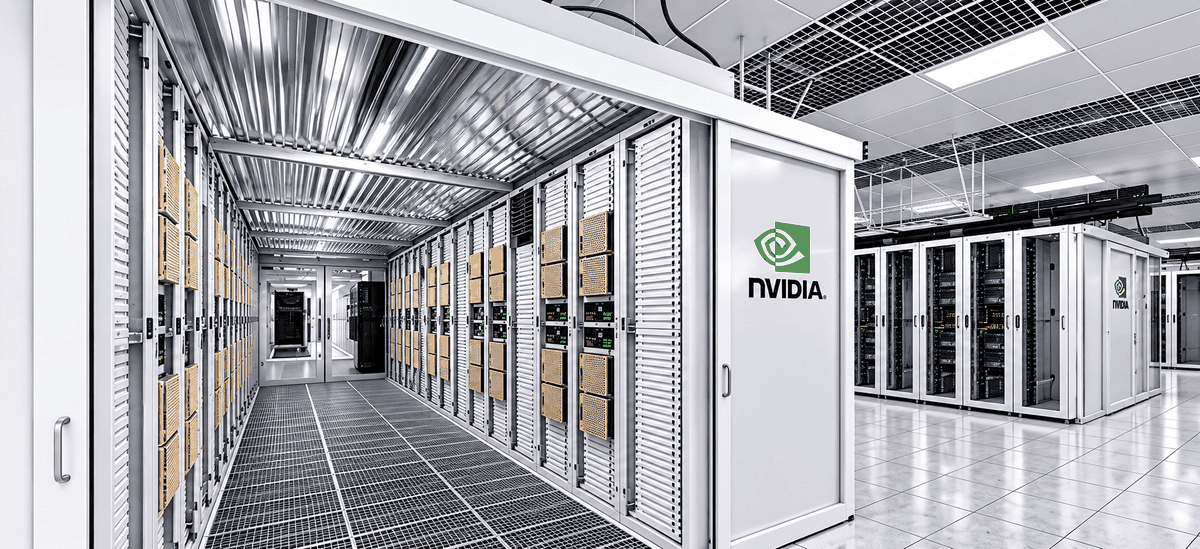
The Development Value of Collaboration with NVIDIA Computing Centers
Large-scale computing centers are critical infrastructure for the modern AI industry.
They typically consist of a large number of high-performance computing devices, servers, network systems, and energy management facilities, providing robust foundational support for large AI models and complex computational tasks.
Weaver AI’s initial collaboration with the NVIDIA Computing Center holds significant value for technological exploration.
First, the NVIDIA Computing Center provides infrastructure support for AI technology testing and computational needs.
Second, by integrating different hardware devices and computing architectures, we can further explore opportunities to optimize system compatibility and computational efficiency.
Furthermore, the integration of computing resources helps lay the groundwork for the deployment of even larger-scale AI applications in the future.
This is not only a crucial aspect of hardware technology research but also opens up new possibilities for Weaver AI’s future technological development and industry collaboration.
Future Development Directions for Weaver AI
As AI technology gradually enters the stage of large-scale commercial application, market demand for high-performance computing, hardware integration, and computing infrastructure will continue to be a priority.
Weaver AI will continue to advance research in areas such as AI hardware technology, computing power resource integration, and the synergistic application of software and hardware.
From technical validation in the experimental phase, to preliminary collaborations with computing power centers, to potential large-scale applications in the future, each step will serve as a crucial milestone in driving the project’s development.
In the future, as technical research deepens and collaborations advance further, Weaver AI is expected to explore more development opportunities in the fields of AI hardware integration and computing power applications.
Charting a New Course for AI Hardware-Software Convergence
The next phase of competition in artificial intelligence will no longer be limited to individual models or algorithms but will encompass comprehensive competition involving chips, hardware architectures, computing centers, and application ecosystems.
Through technical experiments and preliminary collaborations with NVIDIA’s computing centers, Weaver AI continues to explore avenues for breakthroughs in AI hardware technology.
What truly propels artificial intelligence into the future is not just smarter algorithms, but the robust hardware and computing power infrastructure that supports AI’s continuous operation.


 English ▾
 Français
 한국어
 日本語
 繁體中文
 Español
 العربية
 Nederlands
 Deutsch
 Italiano
 Português
 Русский